Germany Launch
Launch your company in Germany.
For founders from abroad. We set up your GmbH, give it a business address in Düsseldorf, open the way to a bank account and a Steuerberater, and help you win your first German customers. One package, one team that keeps it moving.
 Member of the IHK Düsseldorf
 BITMi partnership
- GDPR-compliant processes
- Made in Germany
- ISO/IEC 27001-certified partners
Founders and companies we and our partners have worked with
From global groups to young startups: teams that Salford's people and our technology partner, Bespoke IT Consultants, have worked with.















 Zovi


 Beauty Circle
The package
Everything a German company needs to start trading.
Six parts, one plan. We coordinate every step and tell you what comes next. The notary, the bank and the Steuerberater do the parts German law reserves for them.
Your GmbH or UG, founded properly
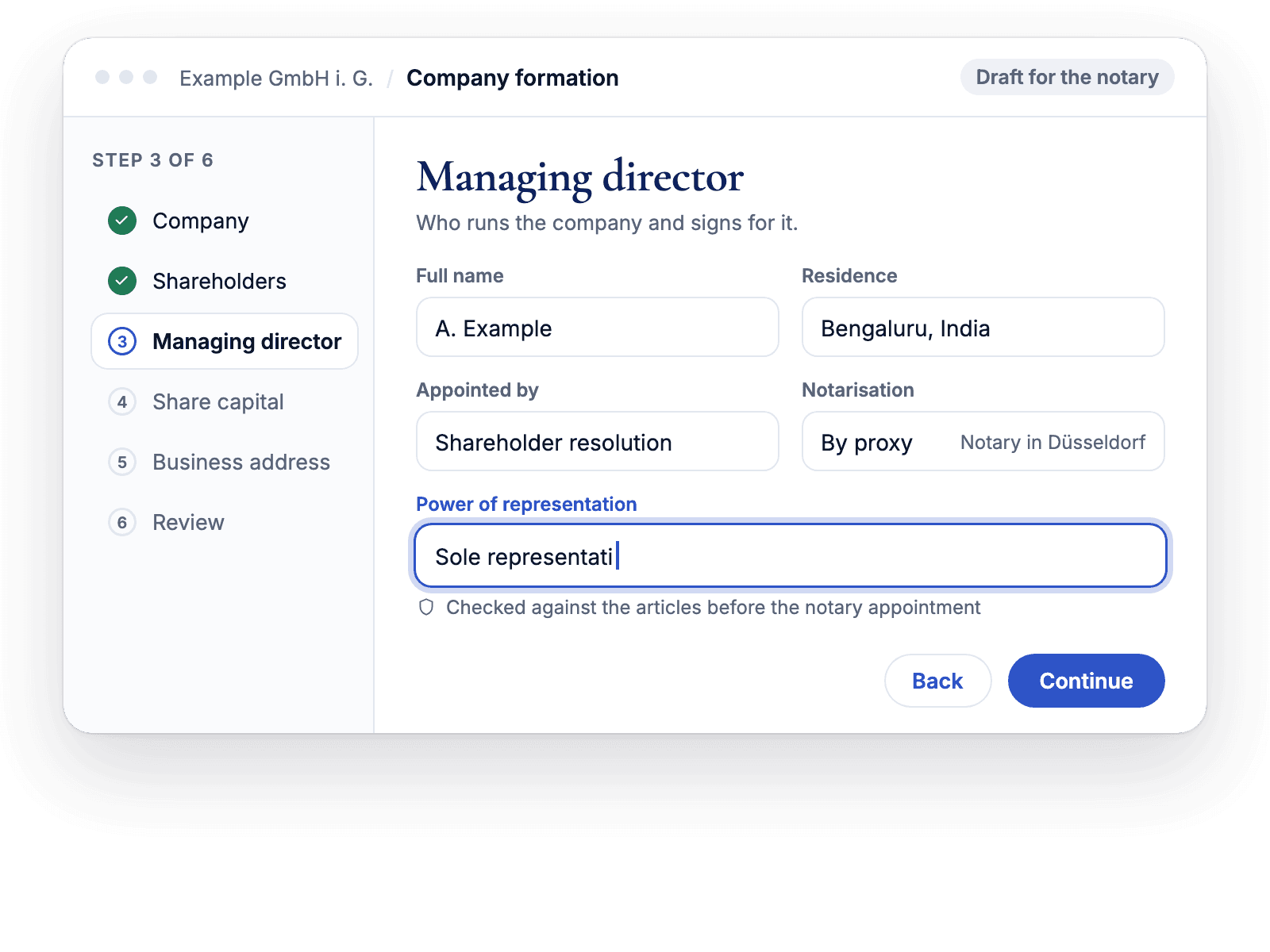
We prepare the articles of association (Gesellschaftsvertrag), the shareholder list and the managing director's appointment, book the notary and walk you through the appointment: in person in Düsseldorf, through a proxy, or by video if you hold a German ID card, a German electronic residence permit (eAT) or an accepted EU eID. The notary files the company with the Handelsregister.
A business address in Düsseldorf
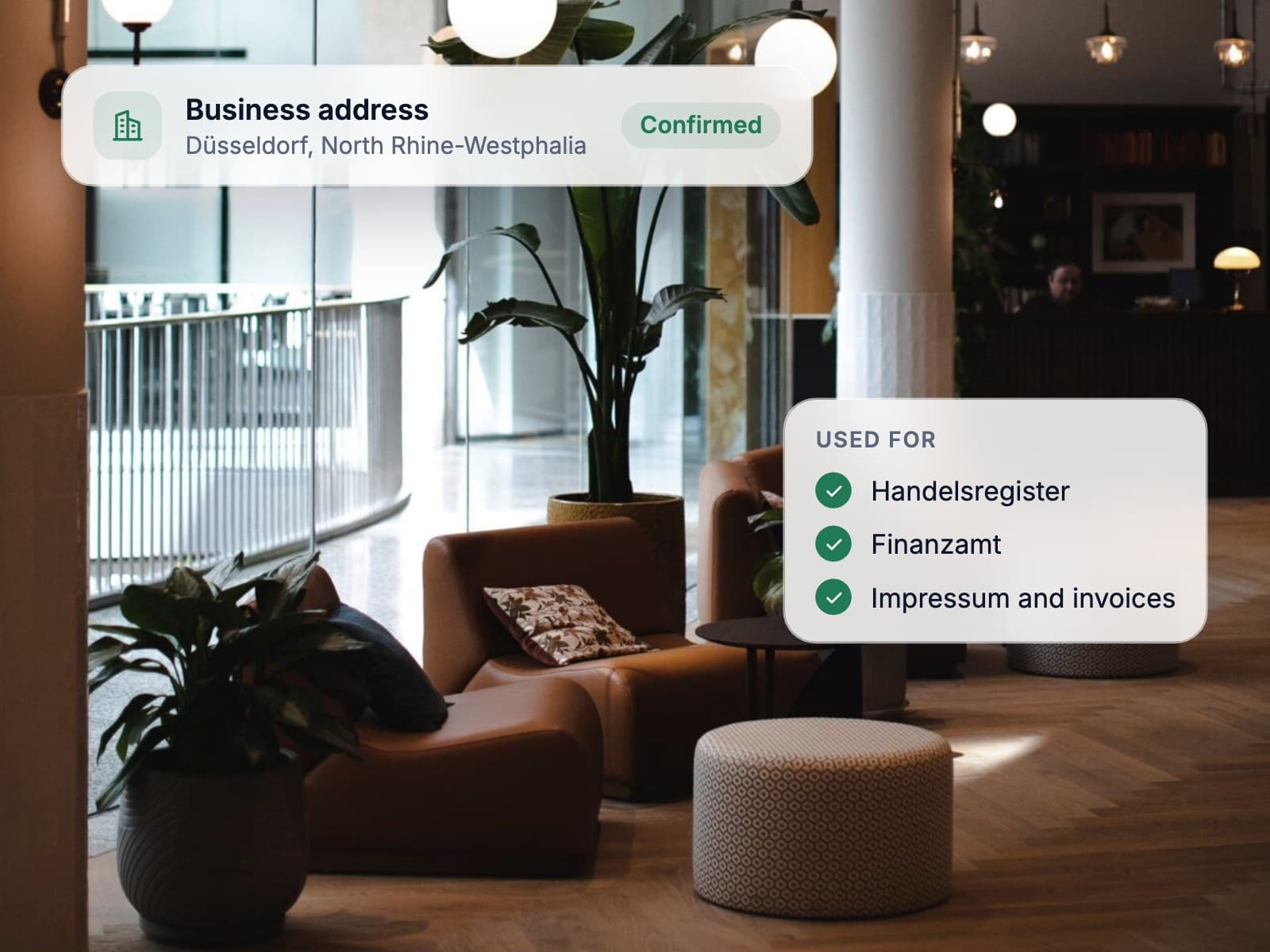
Your company needs a German business address: for the register, for the Finanzamt, for your Impressum and invoices. We provide one in Düsseldorf, in the heart of North Rhine-Westphalia.
A German business account
The Stammkapital is paid into a business account before the company is registered. We prepare the documents banks ask foreign founders for and introduce you to a partner bank. The bank runs its own identity and compliance checks and decides on the account.
A Steuerberater from our network
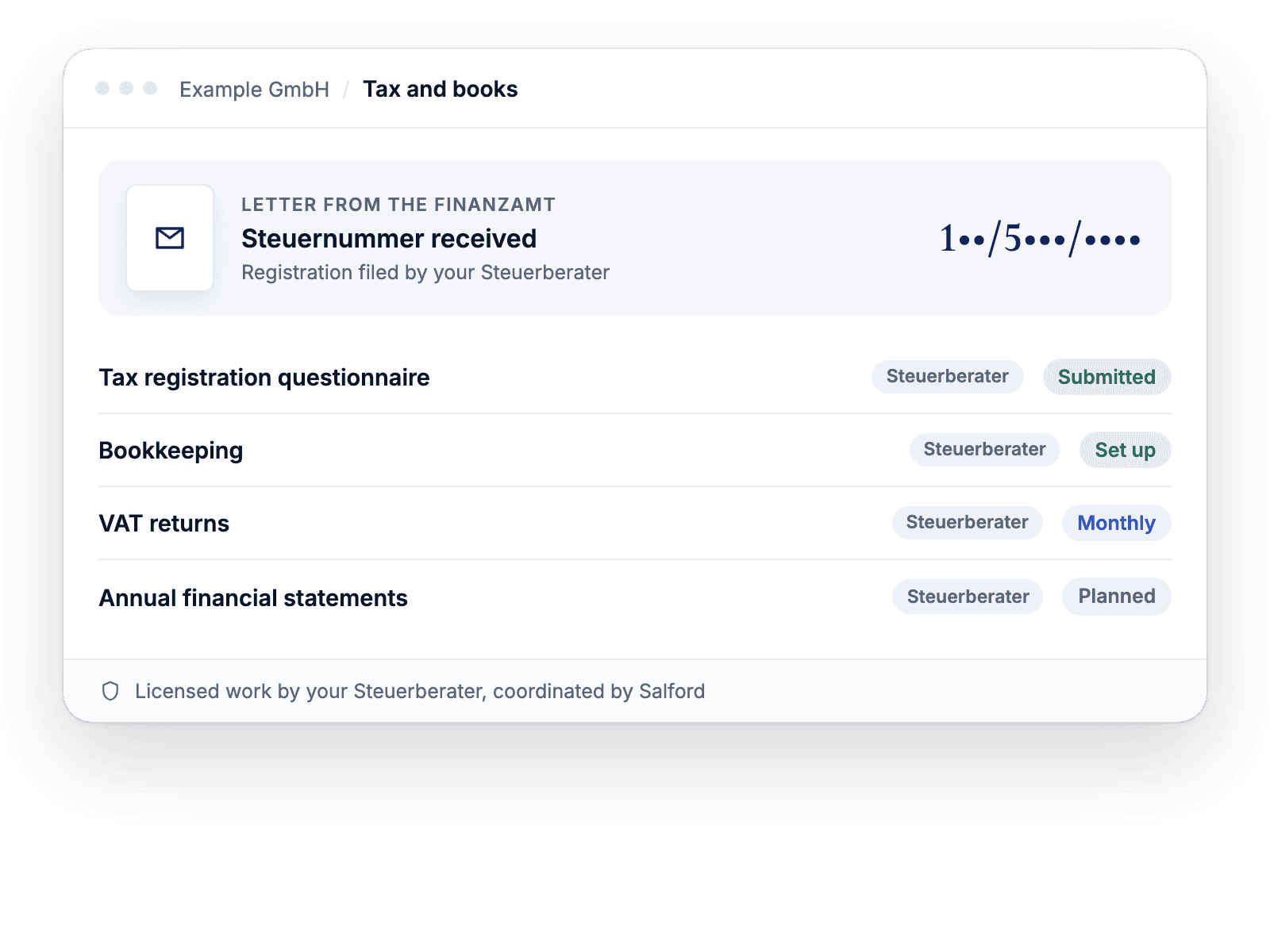
A German company keeps German books from day one. We introduce a Steuerberater from Salford's partner network, who registers the company for tax, keeps the books, prepares the annual accounts and answers your tax questions. Salford itself does not give tax advice.
Every registration, in the right order
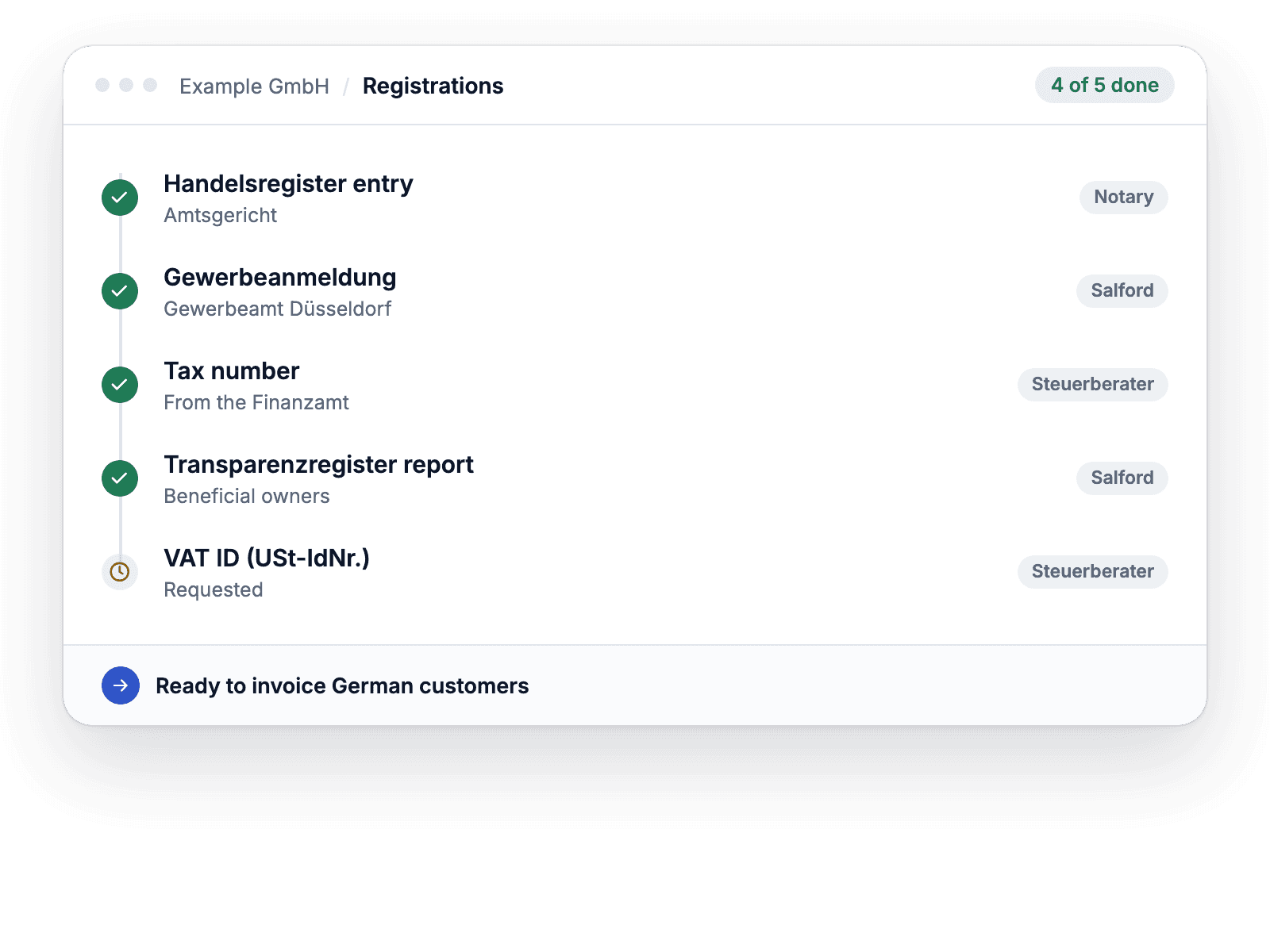
After the register entry come the Gewerbeanmeldung at the local trade office, the tax number from the Finanzamt (and a VAT ID where you need one) and the report of your beneficial owners to the Transparenzregister. We prepare each filing and follow up until it is confirmed.
Your first German customers
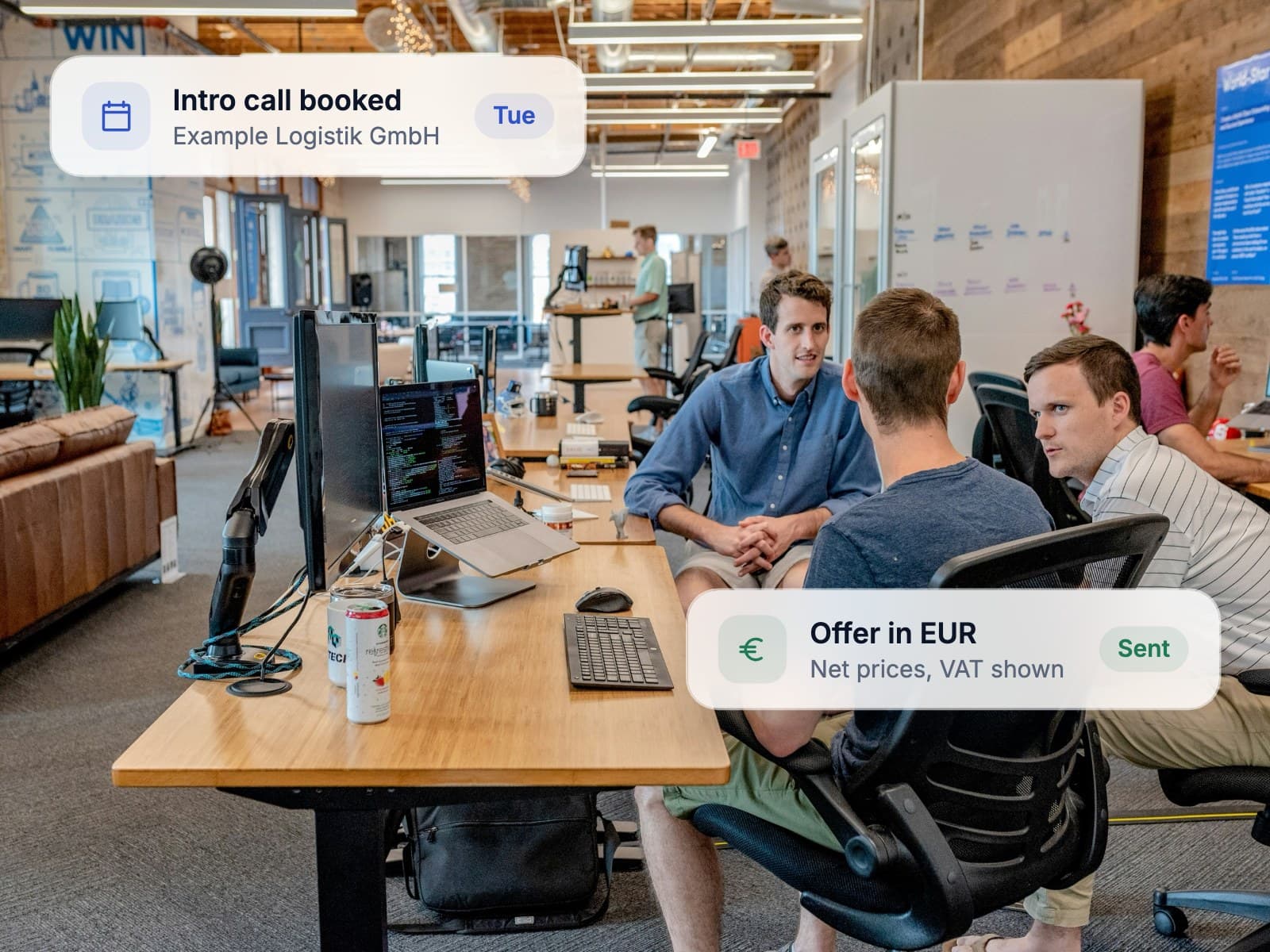
A company is launched when it sells. We sharpen your offer for German buyers, localise your pitch and website and open doors through introductions where they fit. We prepare you for the conversations; we cannot promise who buys.
The package covers Salford's work for all six parts. Your Stammkapital stays your company's money, and official notary and register fees come on top.

Timeline
Usually six to eight weeks to a company that can invoice.
For a SaaS company from India with ten staff, a GmbH launch usually takes 6 to 8 weeks. The pace depends on your documents, the notary's calendar, the bank's checks and the register court. These are typical ranges, not guarantees.
Week 1 to week 8, usually

Week 1
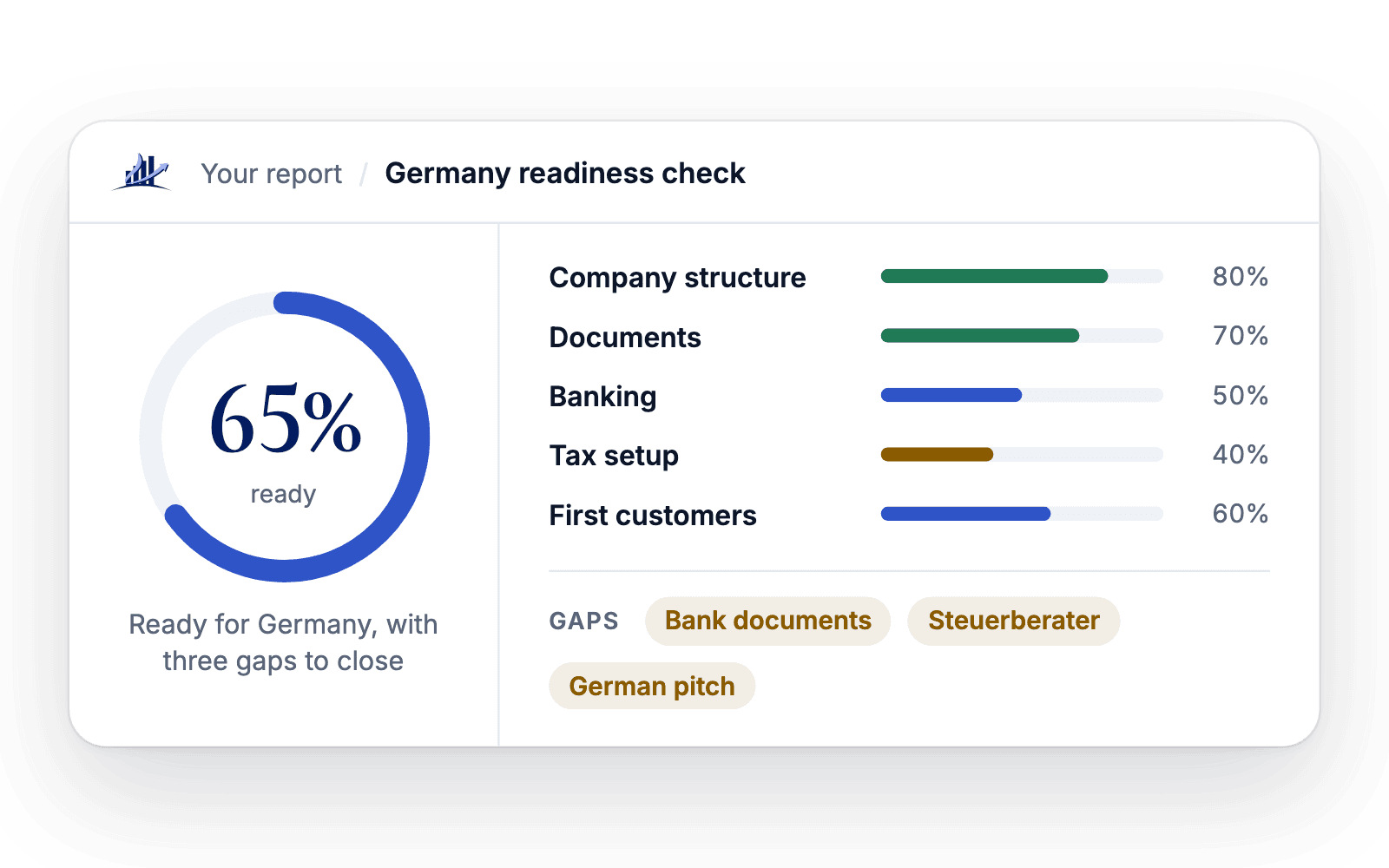
Plan and documents
One call to agree GmbH or UG, shareholders, managing director and business purpose. Then a document checklist for exactly your case.
You haveYour structure on paper and a checklist.
Weeks 2 to 3
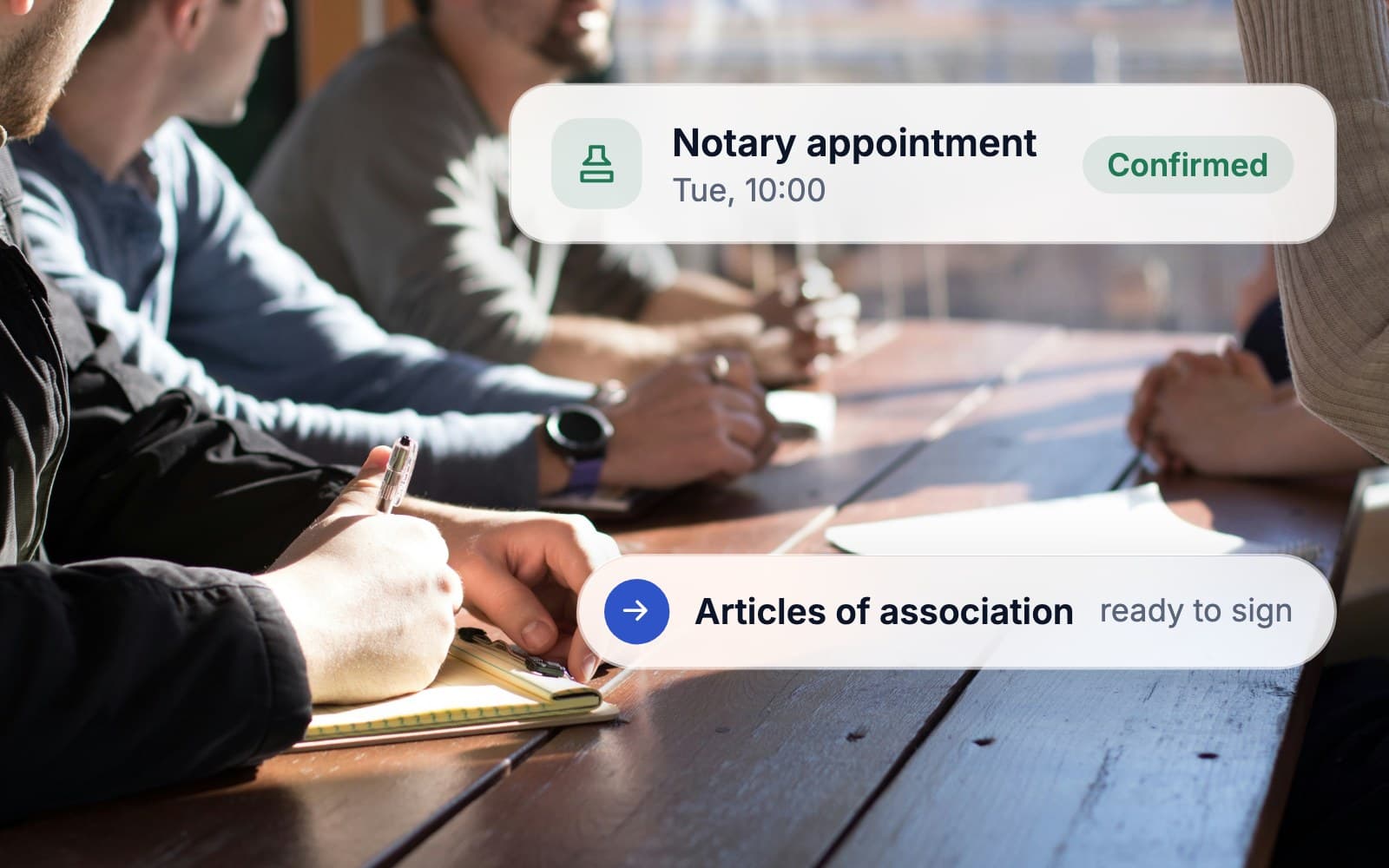
Notary appointment
We prepare the articles with the notary and book the appointment. Documents from abroad often need an apostille or another form of authentication and certified translations; for India the route runs through the German mission, because Germany does not accept apostilles from India. The notary confirms what applies to your documents; this is usually the longest wait.
You haveNotarised articles of association.
Weeks 3 to 5
Bank account and capital
The bank opens an account for the company in formation and you pay in the Stammkapital. The bank's confirmation goes to the notary.
You haveA business account and proof of capital.
Weeks 4 to 7
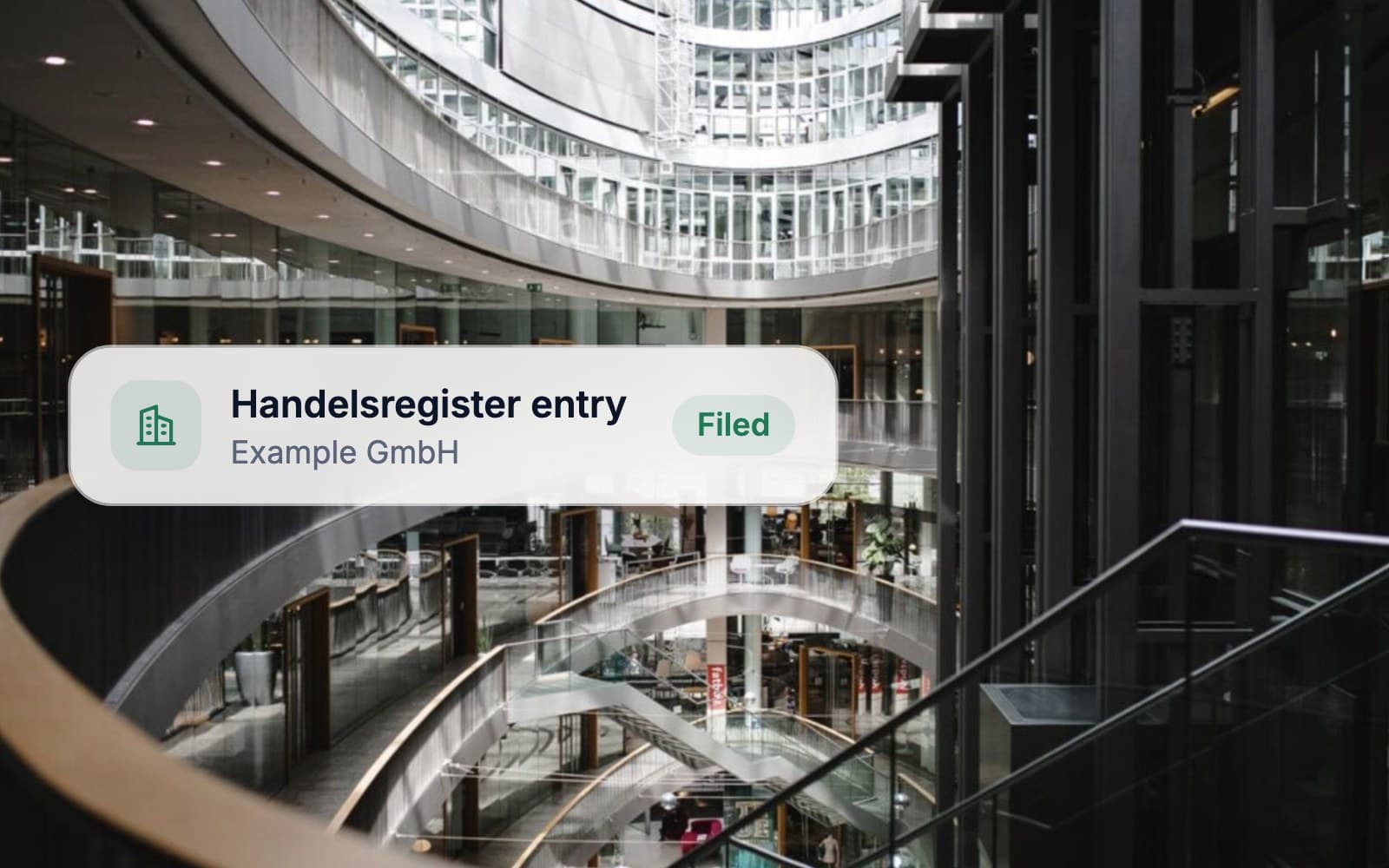
Handelsregister entry
The notary files the company and the register court enters it. From the entry on, your GmbH exists in its own right.
You haveYour entry in the Handelsregister.
Weeks 6 to 8
Registrations and tax
Gewerbeanmeldung, tax registration through your Steuerberater, the Transparenzregister report. Then you can invoice German customers.
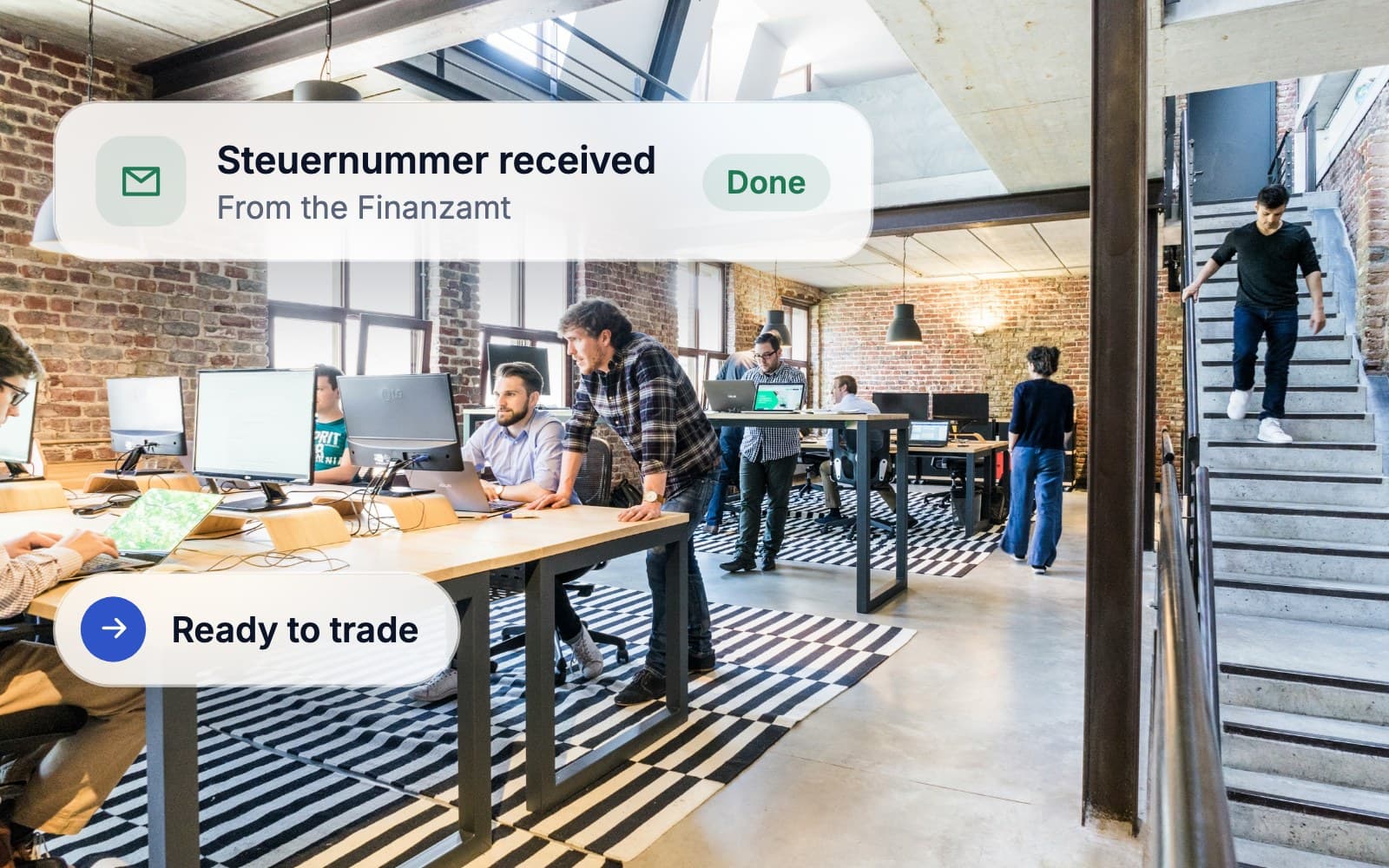
You haveA tax number and a company ready to trade.
From week 4
First customers
Go-to-market runs alongside the paperwork: your offer, German materials and the first introductions.
You haveFirst conversations with German buyers.
Who does what
You bring the documents. We run the process.
German company law reserves some steps for licensed professionals. Here is exactly who does what, so nothing falls between two desks.
What you bring
- Valid passports of all shareholders and managing directors
- Proof of address for each of them, such as a recent utility bill or bank statement
- If a company is a shareholder: its register extract, articles and a board resolution, authenticated as the notary requires (an apostille for many countries; for India via the German mission, because Germany does not accept apostilles from India) and with a certified German translation
- Your business purpose in a few sentences
- Time for the notary appointment and the bank's identity check
What Salford does
- Plans the structure with you and owns the timeline
- Prepares drafts and checklists for notary, bank and authorities
- Books appointments and follows up until each step is confirmed
- Provides the business address in Düsseldorf
- Runs the go-to-market work for your first customers
What licensed partners do
- Notary: notarises the articles and files them with the Handelsregister
- Steuerberater: tax registration, bookkeeping, annual accounts and tax advice
- Bank: opens the account after its own checks
- Lawyers, where needed: contracts, visas, residence and work permits
Salford Ventures prepares and coordinates. We do not give legal or tax advice: the notary, the Steuerberater and lawyers advise and sign within their licences.
GmbH or UG
Two limited companies. One choice to make early.
Both limit your liability to the company's assets. They differ in the capital you start with, what happens to profits and how German buyers and banks read them.
| GmbHGesellschaft mit beschränkter Haftung | UGUnternehmergesellschaft (haftungsbeschränkt) | |
|---|---|---|
| Share capital (Stammkapital) | At least €25,000 | From €1 |
| Paid in before registration | At least €12,500 in total, and at least a quarter of each share | The full amount, in cash |
| Profits | No statutory reserve | A quarter of each year's profit goes into a reserve until the capital reaches €25,000 |
| Contributions in kind | Possible | Not allowed |
| Name suffix | GmbH | UG (haftungsbeschränkt) |
| Later on | Stays a GmbH | Can become a GmbH once its capital reaches €25,000 |
| With German buyers and banks | The familiar standard for business customers | Common for small starts; some buyers and banks ask more questions |
Our view: if you sell to German businesses, a GmbH is usually worth it. A UG makes sense when capital is tight and starting now matters more.
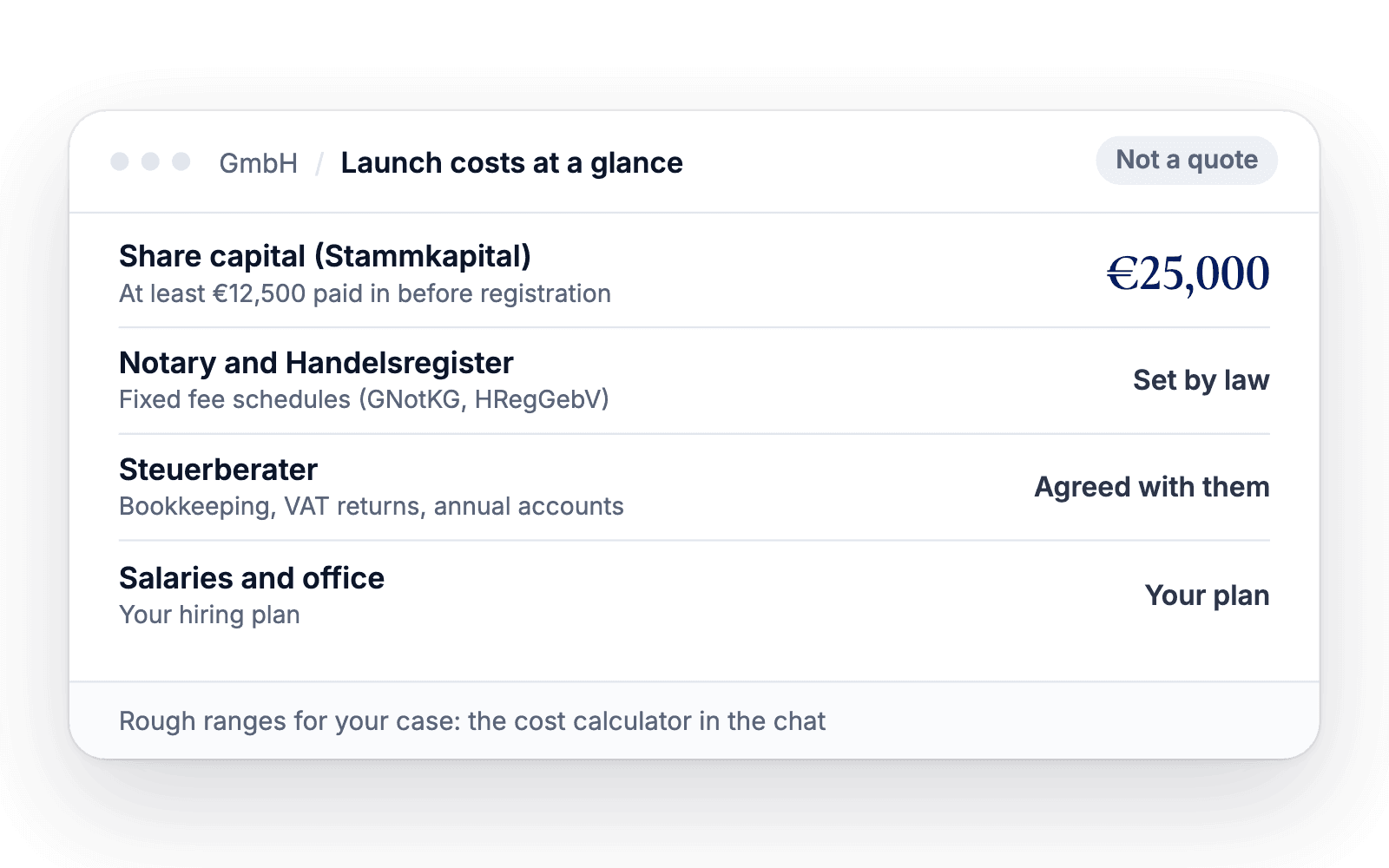
Notary and register fees apply to both and depend on your case. The cost calculator in the chat gives you a rough range.
Open the cost calculatorQuestions
What founders ask before they launch.
Short answers. The call gives you the long ones for your case.
How long does a GmbH launch take?
Usually 6 to 8 weeks from complete documents to a company that can invoice. Authentication and translations of documents from abroad, the notary's calendar, the bank's checks and the register court can make it shorter or longer. You get a realistic plan in the first call, not a guarantee.
Do I have to travel to Germany?
Not always. Founding by video through the German notaries' online procedure works if you hold a German ID card, a German electronic residence permit (eAT) or an accepted EU eID; a passport from outside the EU is not enough on its own. Otherwise you sign in person in Germany, before a German consular officer abroad, or through a proxy with a certified power of attorney. Banks may run their own identity check. We tell you early which route fits.
Can a foreigner be the managing director?
Yes. German company law does not require the Geschäftsführer to be German or to live in Germany. Whether you may live and work in Germany yourself is a separate question of residence law.
Do you help with visas and residence permits?
We coordinate with immigration lawyers from our network, who advise you on visas, residence and work permits for you and your first hires. Salford Ventures does not give legal advice and cannot decide on or speed up an application.
Should I choose a GmbH or a UG?
A GmbH needs €25,000 Stammkapital, at least €12,500 of it paid in before registration, and is the standard German business buyers expect. A UG starts from €1 but must put a quarter of each year's profit into a reserve until it reaches €25,000. We go through your case on the call.
What does the launch cost in total?
For pricing, enquire for free or use the contact form. The package covers Salford's work. On top come your Stammkapital, which stays your company's money, and the official notary and register fees. Running costs such as your Steuerberater depend on your company. The cost calculator gives you a rough range in a few minutes.
We already have a company abroad. Can it own the German GmbH?
Yes, a foreign company can be the shareholder of a German GmbH. The notary then needs proof that it exists and who may sign for it, usually a register extract and a resolution, authenticated as the notary requires (an apostille from many countries; for India, through the German mission, because Germany does not accept apostilles from India) and with a certified German translation. Your Steuerberater looks at the tax side between the two companies.
Do you do our tax returns?
No. Tax work is done by a licensed Steuerberater from our partner network. We introduce them, prepare what they need from you and keep the process moving.
Ready to launch in Germany?
Book a call. You leave it with your structure, your timeline and the list of documents to start collecting.

- Book a call
Free call
Talk to Sam for 30 minutes.
Where you are, what your launch needs, what comes first.
- Open the form
Prefer to write?
Send us your plans.
A short form about your company and timeline. We come back to you with the next steps.